.png)
.png)

Into the Unknown
After Jesus was born in Bethlehem in Judea, during the time of King Herod, Magi from the east came to Jerusalem and asked, “Where is the one who has been born king of the Jews? We saw his star in the east and have come to worship him”. When King Herod heard this he was disturbed, and all Jerusalem with him. When he had called together all the people’s chief priests and teachers of the law, he asked them where the Christ was to be born. “In Bethlehem in Judea”, they replied, “for this is what the prophet has written: ‘But you, Bethlehem, in the land of Judah, are by no means least among the rulers of Judah; for out of you will come a ruler who will be the shepherd of my people Israel’. - Matthew 2: 1 - 6

.jpeg)
"And there, in that humble and astonishing moment, the Magi experience epiphany. The manifestation of Christ does not arrive as conquest."
The Magi arrive in Matthew’s Gospel as figures of mystery, travelers from the East who had spent their lives studying the heavens, interpreting dreams, and watching for signs the rest of the world might miss. They were not Israelites. They did not belong to the familiar household of faith. And yet, somehow, they were paying attention. They had read the sky long enough to recognize that something had changed, that a star had appeared, and in its strange and holy light, they sensed the announcement of a king. Not a king born into spectacle or military might, but one promised through the long memory of Israel, a child from the line of David, the anticipated Messiah, the one for whom generations had waited.
Their arrival unsettled Jerusalem. King Herod, who ruled by fear and calculation, heard their question — “Where is the child who has been born king of the Jews?” — not as good news, but as a threat. Herod knew enough to be afraid. He understood that his power was borrowed, brittle, and politically arranged, and the possibility of a true king stirred in him not wonder, but paranoia. Where the Magi looked up in hope, Herod looked around in suspicion. Where they followed a sign, he began plotting a defense.
Both Herod and the Magi are abiding in anticipation of what is to come, but they wait in entirely different ways. The Magi wait with patient attention, with the restrained hope of those willing to leave what they know in pursuit of what they cannot yet see. Herod waits with clenched hands, fearing that what is coming will take something from him. When he tells the Magi to search carefully for the child and report back so that “I too may go and worship him,” his words are dressed in piety but lined with deceit. Still, the Magi continue on, carrying their questions, their gifts, and whatever measure of courage it takes to journey toward the unknown.
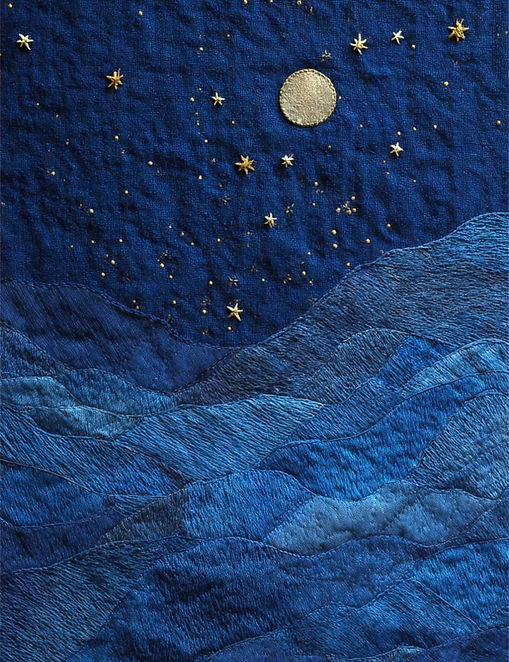
I imagine them moving across the quiet rise and fall of the land, past fields and hillsides, past grazing sheep and watchful goats, past the ordinary life of ordinary people who have no idea that the world is being remade nearby. The star goes ahead of them until at last it stops over the place where the child is found, resting in the arms of his mother.
And there, in that humble and astonishing moment, the Magi experience epiphany. The manifestation of Christ does not arrive as conquest. The Savior is not found above the world, but within it, held, fed, warmed, and watched over. The Magi bow down and worship him, offering gifts of gold, frankincense, and myrrh, and in doing so, they become among the first Gentiles to recognize what Herod, with all his proximity to power and religious counsel, cannot see: God has come near.
There is something deeply ordinary, and therefore deeply unsettling, about this story. The holy does not always arrive in the ways we expect. Sometimes it comes quietly, hidden beneath the noise of our schedules and the habits of our certainty. Sometimes it appears as a small light in the distance, asking whether we are willing to look up long enough to notice.
Like the Magi, Christians are called to search. Not frantically, and not because God is hiding from us, but because faith asks us to remain awake to revelation. We are called to stretch beyond the familiar boundaries of our own comfort, to follow signs of grace into places we may not have chosen for ourselves, to keep pursuing those small epiphanies where God’s love is made visible in the known and the unknown.
If faith is a journey, then it is not meant only to reassure us. It is also meant to change us. It draws us away from the Herod within us, the part that fears disruption, protects control, and mistakes power for peace. It invites us instead toward the posture of the Magi: attentive, humble, searching, and willing to be surprised.
To cultivate faith through hope is to trust that grace can still meet us on the road. It can find us in the field, in the kitchen, in the carpool line, in the quiet after everyone has gone to bed. It can appear in the ordinary and ask us, gently but insistently, to lift our eyes.
The star is still there. The question is whether we are still watching.