.png)
.png)

A Moveable Feast
“While Jesus was having dinner at Matthew’s house, many tax collectors and ‘sinners’ came and ate with him and his disciples. When the Pharisees saw this, they asked his disciples, ‘Why does your teacher eat with tax collectors and ‘sinners’?’ On hearing this, Jesus said, ‘It is not the healthy who need a doctor, but the sick. But go and learn what this means: ‘I desire mercy, not sacrifice.’ For I have not come to call the righteous, but sinners.” - Matthew 9: 10 - 13

Fig 1 | "Preparation for a Feast", Folio from a Divan of Jami | The Met


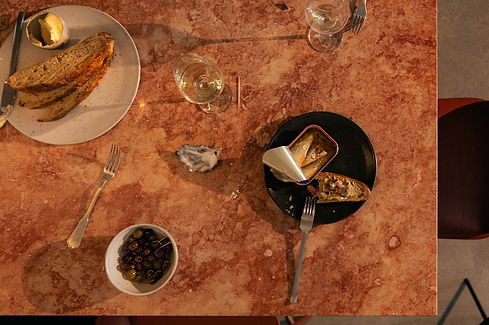
"Again and again, the Gospels return us to this image: Jesus at table breaking bread, sharing space, lingering in conversation. Presence made ordinary. Holiness made near."
Jesus unabashedly dined with tax collectors and sinners, prostitutes, the poor, the afflicted; his neighbors. He also shared plenty of meals with his family and friends, his followers and those who opened their homes to him; also his neighbors. Again and again, the Gospels return us to this image: Jesus at table breaking bread, sharing space, lingering in conversation. Presence made ordinary, holiness made near.
Later in Matthew’s Gospel, the Pharisees question him again. They want clarity. “Teacher,” they ask, “which commandment is the greatest?” Jesus does not hesitate. Love God with everything you have. And love your neighbor as yourself. Everything else hangs there suspended from these two truths.
—Matthew 22:36–40
Love God. Love your neighbor. The instructions are direct, but the practice is anything but simple.
There is a seat at the table for all of us, and each of us arrives carrying something. Story, sorrow, gratitude, need, this diversity is not accidental, but God-given. And in seasons of reflection and thanksgiving, we are invited to ask not only what we are grateful for, but how we are living with and for one another.
As the holidays approach, many of us will gather around tables heavy with food and familiarity. Recipes passed down. Traditions rehearsed. Plates filled. Arms full. We will look around and quietly count our blessings: family, friends, neighbors.
But not every table looks like that.
For some, the table is empty or fractured by absence, estrangement, grief, or unresolved hurt. Some will spend these days alongside illness, incarceration, homelessness, or loneliness. These, too, are our neighbors. These, too, are where Christ chooses to sit.
God is not impressed by our performance of righteousness. He is attentive to our willingness to extend an invitation. To practice mercy. To use what we have not merely for our own comfort, but in service of his kingdom. To ask whether the gifts entrusted to us are being consumed or given.
There is a seat at the table for everyone. And God’s love, like grace itself, is not fixed to one place. It moves. It travels. It multiplies. A feast that does not diminish as it is shared.